
CUCULIFORMES
6 Cuculidae
Cuckoo
|
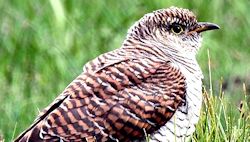
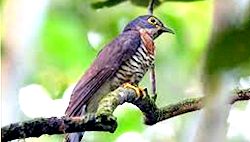
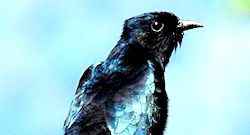
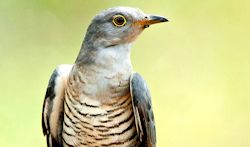
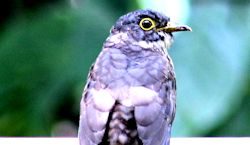
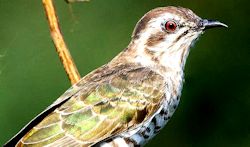
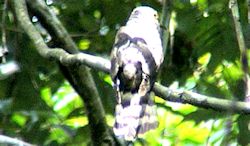
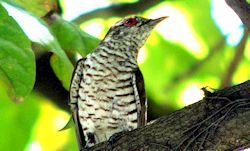
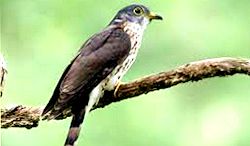
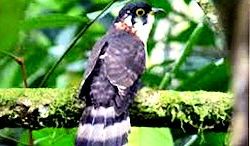
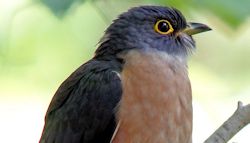
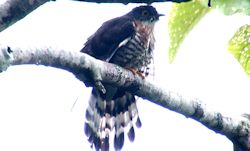
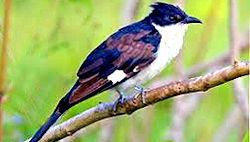
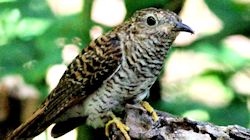
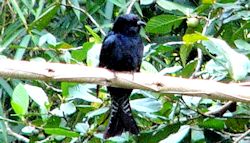
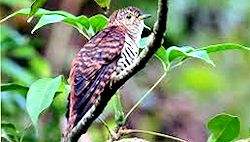
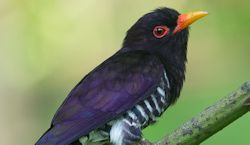
Under this group, there are 3 main categories of birds :- The parasitic Cuckoo, the Malkohas and lastly the Ground Cuckoos. In the whole world, classified under this group of birds, there are 79 species and South East Asia .has 27 of them. I have separated these 3 groups into their individual page. This page deals solely on Parasitic Cuckoos. From this broad group of 27 birds, I have extracted 16 birds which are named as Cuckoo and also reported as sighted in Malaysia. I am happy to say that as confirmed by recent reports, chances of sighting birds listed within this group of Parasitic Cuckoos are extremely good. Having said that there is a good chance of seeing these Cuckoos in Malaysia, sad to say most people in the country do not know the existence of the real Cuckoo in the country. They have not seen one or even they may had chance encounter, which is fairly frequent, they may not recognize one. Why? Cuckoo birds are never seen in public places. The locals who have some interest in birds assume that Cuckoos are the regular birds we see in the park i.e. Spotted Dove and Zebra Dove. Cuckoo is a familiar name for birds and calls from Cuckoo birds are heard so often. E.g. those of the Plaintive Cuckoo in our parks and the calls from Indian Cuckoo are just too familiar and loud at forest edge. Then why are the locals not familiar then? Cuckoos are heard but never seen as they prefer the high canopy to make their calls. When down in the lower storey and in open branches, they were never seen calling. That's why it is possible to co-relate the calls with the birds. Since Cuckoo is such a familiar name, has to equate that the familiar Dove that e see have to assume that role. Also can be seen from this page, I manage to accumulate pictures of the lesser seen Cuckoos and not that much from the more common Indian, Plaintive and Little Cuckoos. As the description "parasitic" for this group suggest, the birds lay their eggs in the nest of other birds than remove the eggs of the occupants. Here in Malaysia, the bird would choose those birds with open nest like that of Prinias, Tailorbird and Bulbuls, which are a fraction of its adult size. These nest again are in the lower storey or even in bushes. It is quite a common sight to witness a tiny adult mother bird feeding a baby of gigantic size at the nest. |

Malaysian Birds
Malkoha
|
Malkohas are large birds with slender
bodies, long tail and short legs. They make up one
more group of birds whose feet are zygodactyl [ i.e. the two
inner toes pointed forward and the two outer backward].
As for family background, Malkohas are in the same group as Cuckoos. For this larger group of birds generally known as Cuckoo, World wide -there are 79 species. In South east Asia - 27 species. The large group can be sub-dived into 3 types of Cuckoos. Firstly the Parasitic Cuckoo - that the name applies and which most of us are familiar with. Then closely followed by the second group consisting of large birds - Malkohas. Lastly a small 3rd group and lesser known birds - the Ground Cuckoo Malkohas being Cuculidae from the subfamily Phaenicophinae, have in total, 28 species world wide. They are New world species living in tropical Central and South America but some are found in South-east Asia and Africa. In Malaysia, though they are forest birds but mostly stay at the forest edge or even open country. Most of them feed on insect but prefer hairy Caterpillars. A food normally avoided by most birds. Malkohas unique preference are common occurrences that I even have pictures on this page to show it happening. Malkoha recognized by their long tail, a stout slightly decurved bill, and bare skin around the eyes. Most Malkoha is described as a shy and restless but sprightly dweller who prefers tall forest canopy. Because of the relatively large size, they can be spotted easily. They do not take flight. Silently they make themselves less conspicuous. But all Malkohas cleverly thread their movements through tangled twigs, creepers and foliage. That classic trait makes Malkohas known for behaving in a squirrel like manner along branches and trying to hide among the thick vegetation. Particularly active in the morning and early afternoon. Overall their action can be described as slow. Then with rounded wings, they are not strong flier. They rather hop from branch to branch until it reaches the top of a tree. From a vantage point , they will glide slowly and directly to another point. Usually is short distances. While doing so the wings produce a soft hum. Ironically, many a times, I was alerted to their presence by this hum. As mentioned, they are classified in the same grouping as Cuckoo, unlike the famed Cuckoo's breeding habit, Malkohas have their own nest. A very basic and simple patch of twigs and leaves. The young are taken care of by both parents. Another fact is that the young leave the nest before they could fly. Perhaps this is where they acquired a skill and habit of creeping along branches. One of the most attractive birds in the Malaysian forest are the Malkohas. Large in size and easy to spot. Very brief flight from one branch to another and then it lies in wait. Happy to meet up with them as they are larger than most birds. Happy they stay long enough for me to get a closer watch. The down side - as they have a habit of staying motionless for a while they tend to crawl and get concealed behind obstacles. So getting a pictures of a full view bird is not easy. Otherwise they are not in a hurry to stay away from humans.
This is the whole list of Malkohas found
in Malaysia and I have pictures of them all, not all but almost.
|
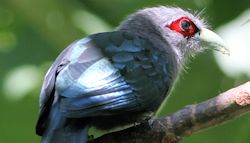 |
1. Black-bellied Malkoha |
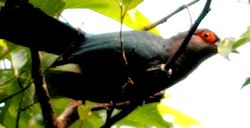 |
2.
Chestnut-bellied Malkoha
|
 |
3. Chestnut-breasted Malkoha |
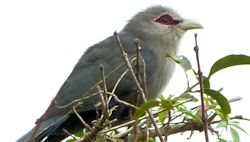 |
4. Green-billed Malkoha |
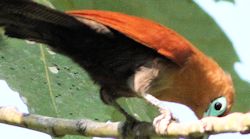 |
5.
Raffles's Malkoha
|
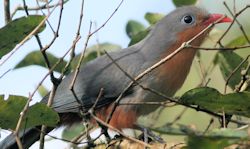 |
6. Red-billed Malkoha |
Coucal
|
Coucal share the same family with the Cuckoos, traced from the sub family of Centropodinae and the genus Centropus. They are different from the Old World Cuckoo who are brood parasites. In fact, in contrary with the habits of the Cuckoo, the Coucal have their sex role reversed. The male provide most of the parental care. Within the group are a wide array of birds which have lots of common looks yet also with great differences in colors. This is a short list of "other" birds of this group and those found in Malaysia are:- 17 species of Cuckoos
6
species of Malkohas
1 Asian Koel 3 species of CoucalsWorld wide there are 30 species of Coucal and 4 of them are found in South-east Asia. In Malaysia, we get to see 3 types. Another unique point about Coucal is its looks. The bird have the head and bill like that of a crow, then the long tail feathers of a pheasant. In earlier days until now, many people has named the bird as a Crow-Pheasant. It is a bulky bird, glossy black in color, very obvious Chestnut wings followed by a long and broad black tail. Both male and female look alike. They are ground birds that prefer tall grasses or low shrubs. Like Junglefowl, Coucal would rather walk and only flies to get away from danger. Found singly most of the time, their food consist of large insects, caterpillars, snails and lizards. Breeding season is February - September. |
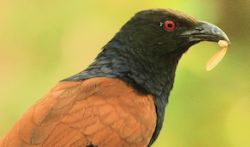 |
1. Greater Coucal |
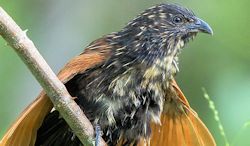 |
2. Lesser Coucal |
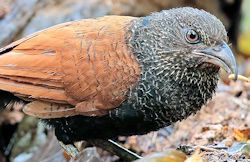 |
3. Short-toed Coucal |
Koel
|
The Asian Koel is a member of the family of birds under Cuculiformes. Within this family, there are also birds with names that we are all familiar with such as Cuckoos, Malkohas and Coucals. The body profile and the posture of the Asian Koel bears so much similarities with these birds. Most important to note is the fact that Koel is also brood parasite i.e. they lays eggs in the nests of other birds. Koel are very frugivorous when their diet consist entirely on fruits. In the 1980's these birds in their passage through Peninsula Malaysia prefers a route passing by the coastal area along the Strait of Malacca. Hence islands like Penang & Pangkor see a lot of these birds. Lately the birds moved further inland and this time we get lots of the birds in our garden as well. Old habits dies hard, on the coastal area, this bird is still seen in larger numbers. The very familiar calls of loud continuous call of "Koo-oo" in monotone is that of the male while a second call heard at times in a form of rapid single tones is that made by the female in respond. As for the origin of the name "Koel", various sources mentioned that the name "Koel" could be echoing the calls that the bird made. There are others who think that the name derived from a Hindi word which has its roots as "Kokila" in Sanskrit. Anyway I learned that in Sri Langka the local name for this bird is "Koka" Koel do not simply lay eggs in empty nest. They carefully chooses the host. When the time is ready, the female would lay her eggs within a day or two after the host has laid her first eggs. Somehow by design they know that their eggs would be hatched 3 days ahead of the host's chicks. The Asian Koel also share lots of similarities with the House Crow like body color and shape. It is marginally slimmer and smaller in size. The main diagnostic marking from the House Crow is that the Koel has a stout greenish beak and red eyes. Size & diagnostic markings:- 44 Cm. The size of 44 cm shows that this is a large bird. The upper part and the under part are in uniform dark color. The feathers are glossy blue-black in color, the stout pale greenish and of course the red eyes. Distribution :- Resident in the Greater Sundas, Philippines, New Guinea. Breeds in the Indian sub-continent, Central and south China. A passage migrant through Peninsula Malaysia. Habitats & preferences:- Secondary growth, cultivated land parks and garden. In Malaysia, where can the bird be found:- As I mentioned, the bird is mostly seen near the coastal region of the Straits of Malacca. Now when in season, the calls could be heard in almost every part of the west coats of Peninsula malaysia. |
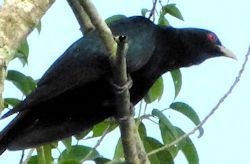 |
Asian Koel |