
Birds Seen on Grasslands
14. CHARADRIIFORMES: Burhinidae
 |
Beach Thick-knee |
CHARADRIIFORMES
17 Charadriidae
Plovers
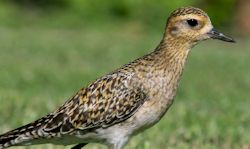 |
|
CHARADRIIFORMES:
17 Charadriidae
Lapwings
It is surprising that ai have added in a different group of birds in this page.
Lapwings belong to another family Vanellinae but traditionally Lapwing are called Plovers
I have grouped them together in one page to show that they are not in the same family
CHARADRIIFORMES
21 Turnicidae
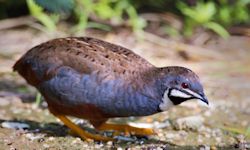
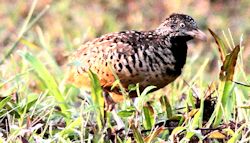
Buttonquail
|
|
Small Buttonquail |
|
|
Yellow-legged Buttonquail |
|
|
Barred Buttonquail |

Pratincole
|
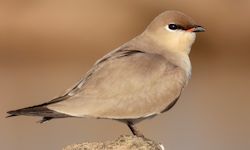
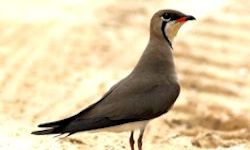
The Courser, known scientifically as the Pratincole, derives its name from the Latin word "cursor," meaning "runner," reflecting its habitual behavior of hunting insect prey on the ground in semi-desert regions of Western Asia and northern Africa. These shorebirds, often referred to as grey waders or Coursers, exhibit an upright posture, small head, long legs, and short toes, perfectly suited for navigating through sparsely vegetated habitats. Pratincoles, resembling a combination of a dove, a swallow, and a plover, are small birds with a soft gray-brown plumage, a tan wash on the throat, and distinctive black lores. Their black-and-white wing pattern becomes prominent in flight, showcasing agility and grace reminiscent of swallows. Notably, Pratincoles possess short legs, very long pointed wings, and elongated forked tails. Despite being categorized as waders, they exhibit an unusual hunting behavior – capturing insects on the wing, akin to swallows, showcasing remarkable aerial acrobatics. Adapted for aerial feeding, Pratincoles have short bills, and their fast and graceful flight includes intricate turns and twists while pursuing prey. These birds are distributed across warmer regions worldwide, breeding in temporary habitats and undertaking long-distance migrations from Europe and Africa through Asia to Australia. Contrary to their nicknames suggesting a connection to the shore, Pratincoles spend the majority of their time away from shores, favoring wet open country. They often gather in large flocks for aerial displays and migrate during daylight hours, especially from October to November, with flock sizes exceeding 100 birds. While single birds are occasionally found near freshwater puddles, the majority of their time is spent in wet, open environments. One intriguing behavior of the Oriental Pratincole is its response to close encounters. When surprised at close quarters, the bird feigns lameness instead of taking immediate flight, showcasing a unique defensive strategy
|
CHARADRIIFORMES
23 Glareolidae
Pratincole

Egrets
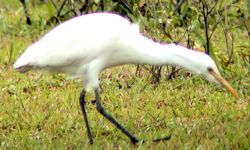 |
1. Cattle Egret |
 |
5. Little Egret |
PASSERIFORMES:
98. Motacillidae
Wagtails
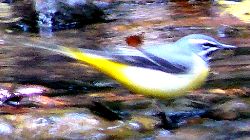 |
Gray Wagtail |
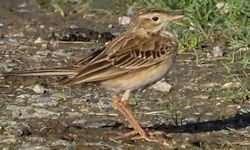 |
Richard's Pipit |
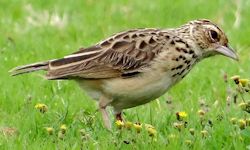 |
Paddyfield Pipit |
 |
Blyth's Pipit |
 |
Red-throated Pipit |
 |
With Will would Wander |
 |