Malaysian Birds
 

CICONIIFORMES

 29  Ciconiidae

     
 Milky Stork


Mycteria cinerea
     
Painted Stork


Mycteria leucocephala
     

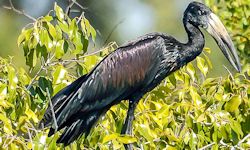
Asian Openbill

 
Asian Openbill


Anastomus oscitans


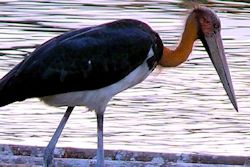
Lesser Adjutant

The Lesser Adjutant is a scavenger characterized by its naked pink skin on the head and neck. During the Victorian era, the Greater Adjutant was referred to as the gigantic Crane and later as the Asiatic Marabou. In contrast, the Lesser Adjutant is more commonly associated with wetland habitats and is often observed as a solitary scavenger.

This bird is widely distributed, ranging from Cambodia and India to Southeast Asia and Java, with the largest populations concentrated in these regions. Despite its large size, exactly how big is the Lesser Adjutant? The wing chord measures approximately 60 cm in length. Similar to other birds in its genus, the Lesser Adjutant retracts its neck during flight, creating an appearance resembling the pouch of the Greater Adjutant.

Both male and female Lesser Adjutants exhibit similar plumage, although males generally have a larger and heavier build. This species is notable for its presence in diverse wetland environments, where it fulfills its role as a solitary scavenger.


Lesser Adjutant


Leptoptilos javanicus


35  Ardeidae
 
 Herons

Waterbirds - there are so many of these long legged, long necks and sharp beaks birds sharing the lot of features they all have in common. In this family Ardeidae, there are 64 recognized species, though some white colored birds are changed to be called "egrets" or "bitterns" instead of "heron".

It is not easy to make a distinct classification of individual heron/egret species, as the tiny differences between them is not that clear cut. Like wise making an ID of them, for example between the various species of Egrets which are all white in color, is not easy. The differences between Herons & Egrets, could be somewhat a little bit more straight forward. All Egrets are assumed to have white feathers [all except the Pacific Reef] So much about introducing this family, Ardeidae and back to this page  that deals with birds having Heron as their names.

Heron, too, nest as a colony in trees.

Herons

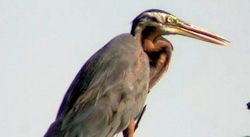
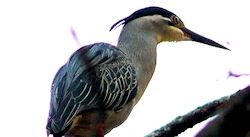
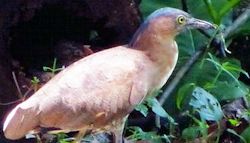
The largest Heron seen in Malaysia is the Purple Heron at 90 cm  while the Striated Heron, the smallest at 40 cm. Some features of these Herons. They are able to kink their neck into an s-shape, due to the modified shape of the sixth vertebrae. Likewise, this action of retracting and extending is also used in flight. The smaller Herons, Pond Herons or Night Herons have shorter necks. The legs, bare without feathers, are long and strong are held backwards in flight. Finally, the bills are long and harpoon like. These bills could be fine or thick. As for colors, only the Pond Heron display dimorphism in plumage.
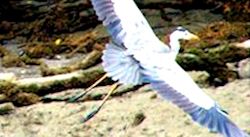
 

Grey Heron


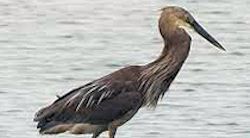
Great-billed Heron


Purple Heron


Striated Heron


Night Heron

Malaysian Night Heron


Black-crowned Night Heron


Rufous Night Heron


Pond-Heron

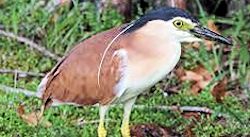
There are 3 species of Pond herons that could be sighted in Malaysia, they are all near identical size - 45 cm.

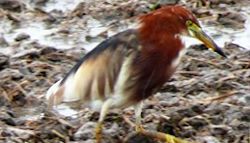
Chinese Pond Heron

It is a bird  of India, China and wintering in the south. This is a fairly common bird in Malaysia. I think in Central Peninsula, makes up the majority of Pond-Heron that we get to see.


All the 3 birds having almost identical features albeit some very minor differences. Very difficult to tell them apart in their normal non-breeding plumages. Likewise, when they take flight the underside of the wings and tail is also white. Take note, when in doubt whether the bird is a Pond heron or Night Heron. Wait till it flies.

Pond herons are most likely seen in open areas with pools of waters, e.g. sewage ponds, fish ponds and padi fields. They could also be among the low trees by the river and in mudflats.

The only way to ID them is when they are in breeding plumage. Pictures in separate tables below would show. But first, this is a series of pictures showing Pond-heron in general.

Although all the birds named have their habitats related water. So not surprising that I have seen all the 3 groups of them in a single space sharing the same feeding and breeding environment. Other than this common turf, for myself, mentally I associate them in different settings. First, I go according to various habitats that they are seen most often - for example, the Herons in open country, the Pond-herons in sewage ponds and waterways and the Night-herons in colony. I think each of us will eventually find our own way to do a quick ID on these birds.

To conclude this page on Herons, I must say that Herons, particularly the Pond heron with their breeding plumage is interesting. There is only a small window of time each year, to do all the following up for ID and picture taking.

A good portion of the page on Heron is taken up by the Malayan Night Herons, which is a bird that is nearly impossible to follow. Just simply "not there" for us to watch or doing any follow up visit to learn more about them.

Against that background of obstacles in preparing this page, i think that when the name Hero is mentioned, it is no surprise that most people would think of the Purple, Grey and Little Herons. And also in this same order, that the birders are familiar with. Now I hope with more awareness, I am included, we should spend more time to ponder over the facts that we know so little about this group of birds.

35  Ardeidae
Egrets

 Egrets share this family with other birds Herons & Bittern which are all having the same body profiles and habitats. Bitterns. All these birds are long-legged freshwater and coastal birds and there are 64 recognized species in this family. Some Egrets joined other Herons to nest colonially on trees while a couple of species use reed beds.

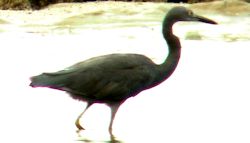
The necks are able to kink in an s-shape, due to the modified shape of the sixth vertebrae. The neck is able to retract and extend, and is retracted during flight, unlike most other long-necked birds. To differentiate itself from the Herons, all Egrets are white in color except one species, the Pacific Reef Egret has two color morphs, the light and the dark. The percentage of each morph varies geographically. White morphs only occur in areas with coral beaches.

Most Egrets are seen in open country with wetlands but gather in large numbers in the rice fields and mudflats. There may be isolated individuals staying under the shelters on river banks. Apart from the variance in size between a couple very marginal, it is a daunting task to make a positive ID in the field as judgment by size is neither easy. I will attempt to list out some method commonly used to differentiate them.

Focusing on Egrets that can be seen in Malaysia:


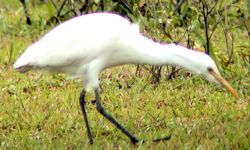
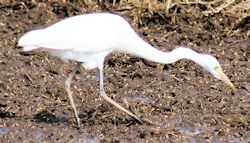
Cattle Egret


2. Chinese Egret


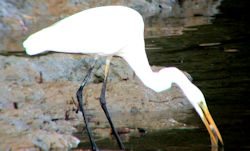
Great Egret


Intermediate Egret


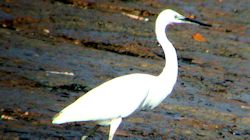
Little Egret


Reef-Heron


The image of Egrets is very fixed in the minds of the local - they are all in white, large birds and very often flying in flocks. Of course not many people know that there are divided into so many species, large and small. For the bird watchers, this is a dull looking bird but with the challenging task of being able to ID each and every one properly as they are encountered.

 44  Alcedinidae

 Kingfishers


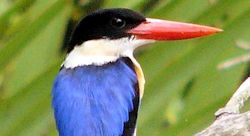
 Black-capped Kingfisher
   
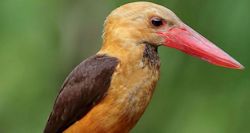
Brown-winged Kingfisher.
   
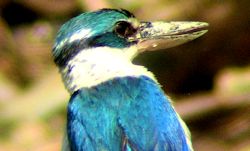
Collared Kingfisher


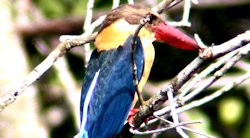
Stork-billed Kingfisher
   
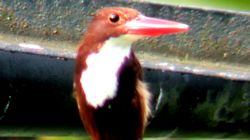
 White-throated Kingfisher
   
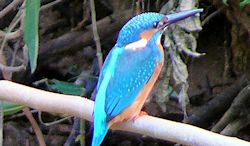
 Common Kingfisher
   

 49 Picidae

Woodpeckers 

   
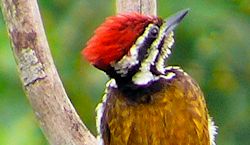
Common Flameback
   
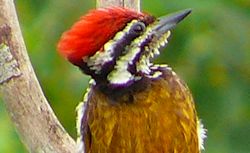
 Greater Flameback
   
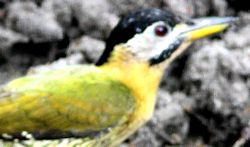
 Laced Woodpecker
   

hh

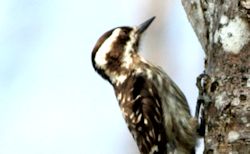
 Gray-capped Woodpecker
   
 Sunda Woodpecker 
   

PASSERIFORMES

58  Pachycephalidae

Whistler

   
Mangrove Whistler


PASSERIFORMES

 90   Muscicapidae

Flycatcher

   
 Mangrove Blue Flycatcher
   

Return to Bird List Page

With Will would Wander