
Malaysian Birds family
PASSERIFORMES Irenidae
93 Asian Fairy Bluebird
|
This is a small group of birds under this category which covers Fairy Bluebirds and Leafbirds. World wide there are only 10 species and out of which 6 are in South east Asia. The 5 Leafbirds had a page on their own and to bring in some similarity to the Leafbirds, I made that past and remote link This Bluebird is now reclassified as a Irenidae These birds Bluebirds and Leafbirds are known to feed on berries, insects as well as nectar but more so on berries at times hunting nectar
|
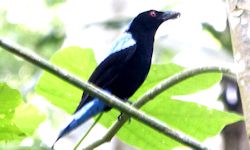 |
Asian Fairy Bluebird |
|
Leafbirds are medium sized birds with the same body profile as the very common Bulbul birds, so should be easy to spot. However as the name of most birds implies, these are green leaf birds. Birding in tropical forest is a region where all leaves within our forest are green throughout the year. This common name stays - denoting that the natural camouflage for the birds was so good that it is rather a task to spot the bird, let alone getting pictures of the bird among the green foliages. Most species as I know of have the habit of making continuous calls while foraging. It is always these calls that alert birders to their presence in the area. Among the whole lot of birds shown, only the Lesser and the Greater Green Leafbirds have plain colors and also presented some problems to spot. The male species of the remaining 2 Leafbirds are colorful and with the vibrant tones on their bodies, it is easier to weed out the birds among a field of green. Most species with the exception of the Golden-fronted are plentiful in Malaysia and among the first birds to be spotted in the forest edges. As common as Yellow-vented Bulbul in our backyards, Leafbirds are encountered readily i.e if you can spot their whereabouts. The only bird which belong to this same family and excluded from this group of greenish shaded bird would be the Asian Fairy Bluebird. |
PASSERIFORMES:
94 Chloropseidae
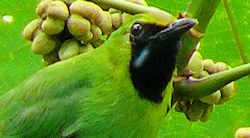 |
Greater Green Leafbird | Chloropsis sonnerati |
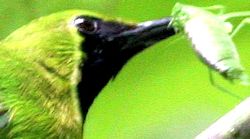 |
Lesser Green Leafbird | Chloropsis cyanopogon |
 |
Blue-winged Leafbird | Chloropsis moluccensis |
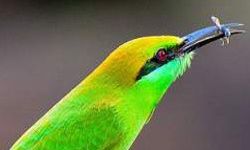 |
Bornean Leafbird | Chloropsis kinabaluensis |
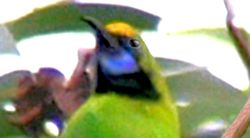 |
Golden-fronted Leafbird | Chloropsis aurifrons |
 |
Orange-bellied Leafbird | Chloropsis hardwickii |
95 Baya Weaver
|
Among the Weaver bird's family , the Baya weaver (Ploceus philippinus) found across the Indian Subcontinent, south and south-west China, down to Sumatra and Java. In Southeast Asia, it is an uncommon bird in Indochina but rather common resident in Peninsula Malaysia. The bird practiced community living where by a flock would together and build their own nest. Their choice of environment as I can see, perhaps near to human habitat but with one important point. The host tree is inaccessible. These could be some precarious slopes, thick under grown or amidst a wetland. Normally the surrounding would also have grasses with long blade where they could harvest their leafy materials. manually. These nest colonies are usually found on thorny trees or palm fronds and the nests are often built near water or hanging over water where predators cannot reach easily. They are widespread and common within their range but are prone to local, seasonal movements mainly in response to rain and food availability. A lot of follow-up has been done on their method of weaving and found that an average nest would have a combined usage 3,300 blade of grasses. The nest would be completed in 2 stages. First the male would build an inverted cup shape nest. When completed, a selected female would be asked to inspect the construction. If approved, both birds would then complete the lower portion which would incorporate an exit funnel facing down wards. To make the nesting period interesting, the male with their breeding plumage of bright yellow is very colourful
|
 |
Baya Weaver | Ploceus philippinus |
PASSERIFORMES:
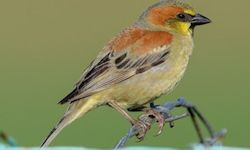
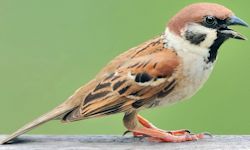
97. Passeridae
Sparrows
 |
|
 |
|
 |
|
PASSERIFORMES:
98. Motacillidae
Wagtails
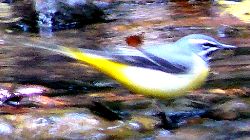 |
Gray Wagtail | Motacilla cinerea |
 |
Eastern Yellow Wagtail | Motacilla tschutschensis |
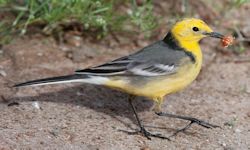 |
Citrine Wagtail | Motacilla citreola |
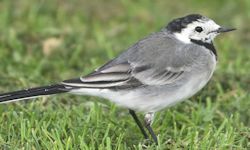 |
White Wagtail | Motacilla alba |
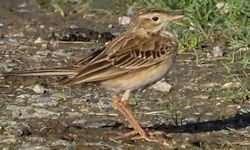 |
Richard's Pipit | Anthus richardi |
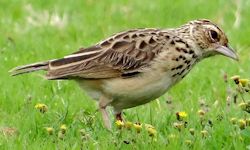 |
Paddyfield Pipit | Anthus rufulus |
 |
Blyth's Pipit | Anthus godlewskii |
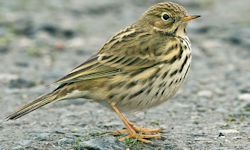 |
Olive-backed Pipit | Anthus hodgsoni |
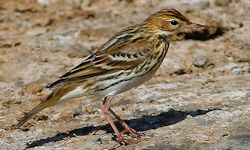 |
Pechora Pipit | Anthus gustavi |
 |
Red-throated Pipit | Anthus cervinus |
PASSERIFORMES:
99. Fringillidae
Bullfinsch
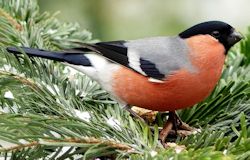 |
Brown Bullfinsch |
PASSERIFORMES:
100.
Emberizidae
Bunting
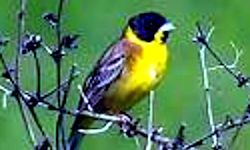 |
Black-headed Bunting |
 |
Chestnut-eared Bunting |
 |
Yellow-breasted Bunting |
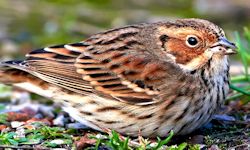 |
Little Bunting |
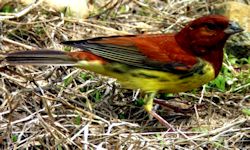 |
Chestnut Bunting |
 |
With Will would Wander |
 |