|
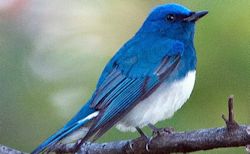
Malaysian Birds - Flycatchers These are small birds with flatten bills. They may be in blue, brown or grey in colors. World wide there 116 species and of which 42 can be spotted in South-East Countries. From the list below, 33 species was reported seen in Malaysia. This is one kind of birds that makes bird watching interesting. They are small and most of them on the list are either migrants or passage migrants. It is an annual wait for the period of time each years when the birds are southbound and returning north. Some return to the same locality while others are waiting to be spotted. For such a large number of birds, I made my personal selection in grouping them into 3 pages to keep the number of birds small as well seeking some similarity for easy references. |
PASSERIFORMES
90 Muscicapidae
The dull coloured Jungle Flycatchers
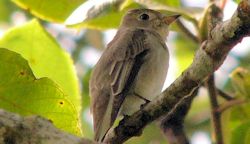 |
1. Asian Brown Flycatcher |
 |
2. Brown-chested Jungle-Flycatcher |
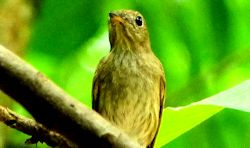 |
3. Brown-streaked Flycatcher |
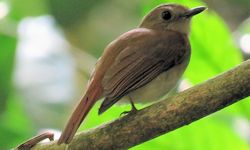 |
4. Chestnut-tailed Jungle-Flycatcher |
 |
5. Dark-sided Flycatcher |
 |
6. Eyebrowed Jungle-Flycatcher |
 |
7. Fulvous-chested Jungle-Flycatcher |
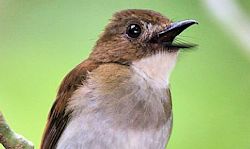 |
8. Gray-chested Jungle-Flycatcher |
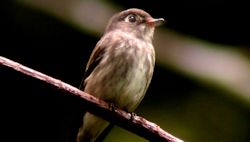 |
9. Gray-streaked Flycatcher |
The more colourful regular Flycatchers
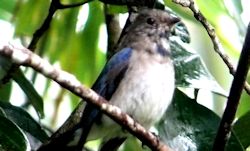 |
10. Blue-and-white Flycatcher |
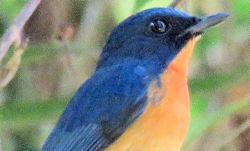 |
11. Bornean Blue Flycatcher |
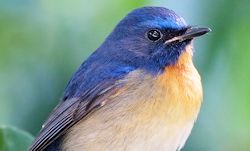 |
12. Chinese Blue Flycatcher |
 |
13. Ferruginous Flycatcher |
 |
14. Green-backed Flycatcher |
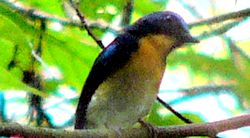 |
15. Hill Blue Flycatcher |
 |
16. Indigo Flycatcher |
 |
17. Indochinese Blue Flycatcher |
 |
18. Large Blue Flycatcher |
 |
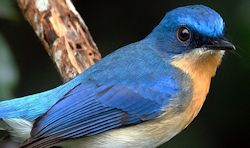
19. Little Pied Flycatcher |
 |
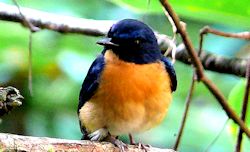
20. Malaysian Blue Flycatcher |
 |
21. Mangrove Blue Flycatcher |
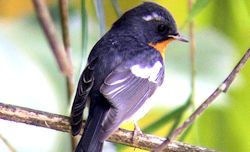 |
22.Mugimaki Flycatcher |
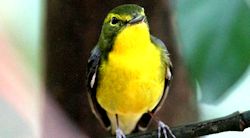 |
23. Narcissus Flycatcher |
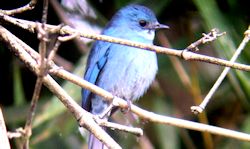 |
24.Pale Blue Flycatcher |
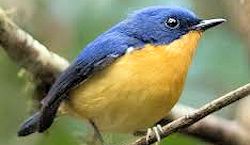 |
25. Pygmy Flycatcher |
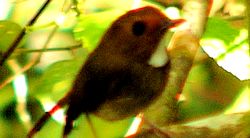 |
26. Rufous-browed Flycatcher |
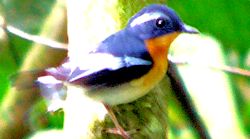 |
27. Rufous-chested Flycatcher |
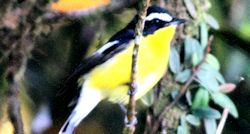 |
28. Snowy-browed Flycatcher |
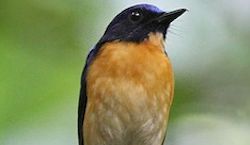 |
29. Sunda Blue Flycatcher |
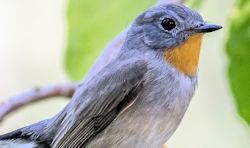 |
30. Taiga Flycatcher |
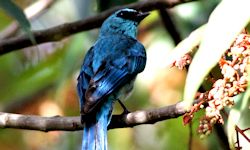 |
31. Verditer Flycatcher |
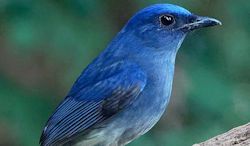 |
32. White-tailed Flycatcher |
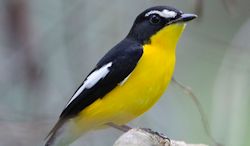 |
33. Yellow-rumped Flycatcher |
 |
34. Zappey's Flycatcher |
|
These small birds have one feature in common and that is using the rictual bristles to catch flying insects. As for habits, many of them seek regular perch. i.e. opting for the favorite perch and returning to the same perch the whole day or season. Well, some may not but still hang around the vicinity of the tiny locality. Most of the Flycatchers have weak songs, more like murmuring while a couple have louder whispers. They are usually alone and perhaps another Flycatcher in the nearby area, but I have yet to see them acting in pair. Looking for the small Flycatchers is always an interesting task. May they be the normal colorful Flycatchers or the "Blue" Flycatchers. Many of these birds are winter visitors to our country. There must be so much of them in the forest but not easily seen. They remain in their individual one small location all by themselves. Though being at the right spot, the bird easily encountered, but there is still a task of combing teh forest for them. Those locally available Flycatchers are easy to photograph as typical of Flycatchers, they stay around the same area though not in the same spot as those migrant. Lastly there is another small number of Flycatchers who are passage migrants. Meeting up with these birds are merely by chance. |
90 Muscicapidae
Whistling Thrush
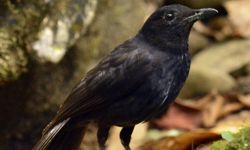 |
Bornean Whistling-Thrush | Myophonus borneensis |
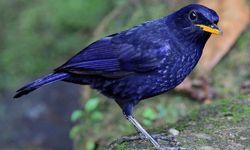 |
Malayan Whistling-Thrush | Myophonus caeruleus |
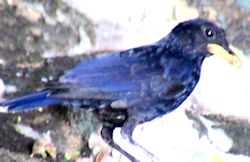 |
Blue Whistling-Thrush | Myophonus robinsoni |
90 Muscicapidae
Shortwing
 |
Lesser Shortwing | Brachypteryx leucophris |
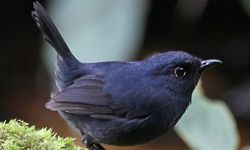 |
Bornean Shortwing | Brachypteryx erythrogyna |
90 Muscicapidae
Bluetail
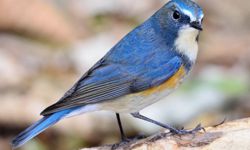 |
Red-flanked Bluetail | Tarsiger cyanurus |
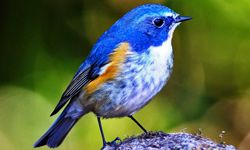 |
Himalayan Bluetail
|
Tarsiger rufilatus |
90 Muscicapidae
Robin
| The Robin in
this page comes under a section on birds which are neither
Flycatchers nor Warblers. They too, could be classified as Thrushes. This
is a large grouping for birds with rather long legs, rounded head
and large eyes. Stands upright with tails that are cocked
periodically. Almost all of them terrestrial feeder for insects and
small fruits near ground level. Very vocal and many are accomplished
songsters There are approximately 55 species and subspecies in this genus named as Copsychus. Small passerine insectivores with weak songs and harsh calls. Sometimes they are refer as "Magpies". So called, as they are believed to be so noisy that the term ‘magpie’ is used for humans who chatter too much is hence applied to them. Contrary to this "hear-say" term, the real Robins are rather shy and unobtrusive birds. Here are some names which are no strangers to many birders.
The names in bold, are the species that
I have chosen to be featured for this page.
While preparing the pages on birds, sometimes it would be good to mention birds sharing close traits with those birds featured in this page. That's why the Shama are mentioned. Though having mentioned their names and the co-relation, Shama are posted as separate pages. So this page, exclusively is one on Robin.
|
.JPG) |
1.
Oriental
Magpie-Robin
|
Copsychus saularis |
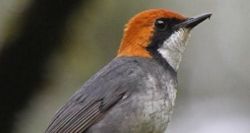 |
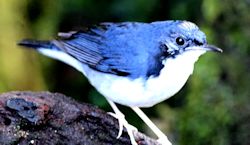
2. Rufous-headed Robin
|
Larvivora ruficeps |
 |
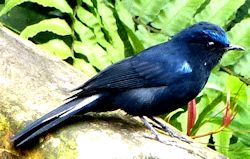
3.
Siberian Blue
Robin
|
Larvivora cyane |
 |
|
Myiomela leucura |
|
This is an extreme situation when the Oriental Magpie Robin is the most common bird in Malaysia and seen in almost all environment. Then in contrast, there are the 2 other Robins which are hardly seen and needed much effort to locate. So if you are visiting the country, the White-tailed is not that difficult. The Siberian Blue Robin, you need contacts locally to show you the spots. |
PASSERIFORMES
90 Muscicapidae
Shama
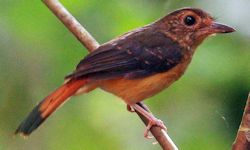 |
Rufous-tailed Shama | Copsychus pyrropygus |
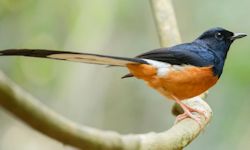 |
White-rumped Shama | Copsychus malabaricus |
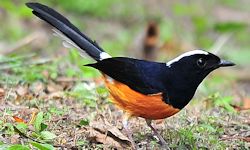 |
White-crowned Shama | Copsychus stricklandii |
90 Muscicapidae
Rock-Thrush
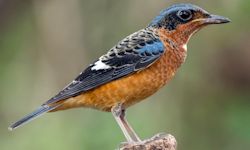 |
White-throated Rock-Thrush | Monticola gularis |
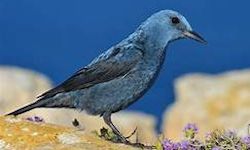 |
Blue Rock-Thrush
|
Monticola solitarius |
PASSERIFORMES
90 Muscicapidae
Forktails
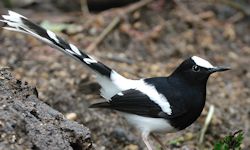 |
White-crowned Forktail |
Enicurus leschenaulti
|
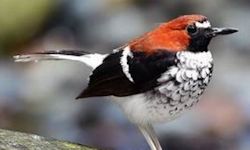 |
Chestnut-naped Forktail
|
Enicurus ruficapillus
|
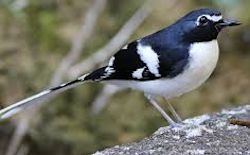 |
Slaty-backed Forktail
|
Enicurus schistaceus
|
PASSERIFORMES
90 Muscicapidae
Flowerpeckers
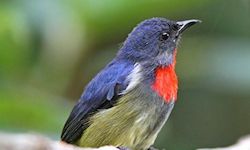 |
Black-sided Flowerpecker | Dicaeum monticolum |
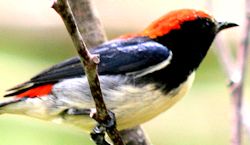 |
Scarlet-backed Flowerpecker | Dicaeum cruentatum |
PASSERIFORMES
90 Muscicapidae
Niltavas
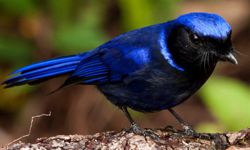 |
Large Niltava | Niltava grandis |
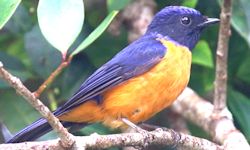 |
Rufous-vented Niltava | Niltava sumatrana |
90 Muscicapidae
Redstart
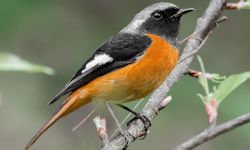 |
Daurian Redstart | Phoenicurus auroreus |
90 Muscicapidae
Stonechat
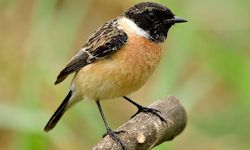 |
Siberian Stonechat | Saxicola maurus |
90 Muscicapidae
Bushchat
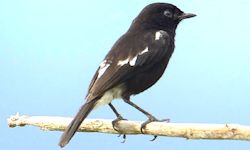 |
Pied Bushchat | Saxicola caprata |
90 Muscicapidae
Wheatear
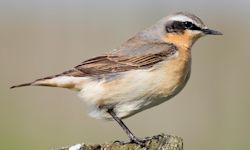 |
Northern Wheatear | Oenanthe oenanthe |
90 Muscicapidae
Bluethroat
 |
Bluethroat | Luscinia svecica |
90 Muscicapidae
Rubythroat
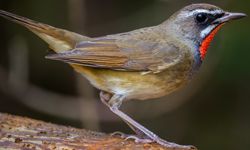 |
Siberian Rubythroat | Calliope calliope |
PASSERIFORMES -- neighboring groups of birds with the same feathers
88 Sturnidae
 |
With Will would Wander |
 |